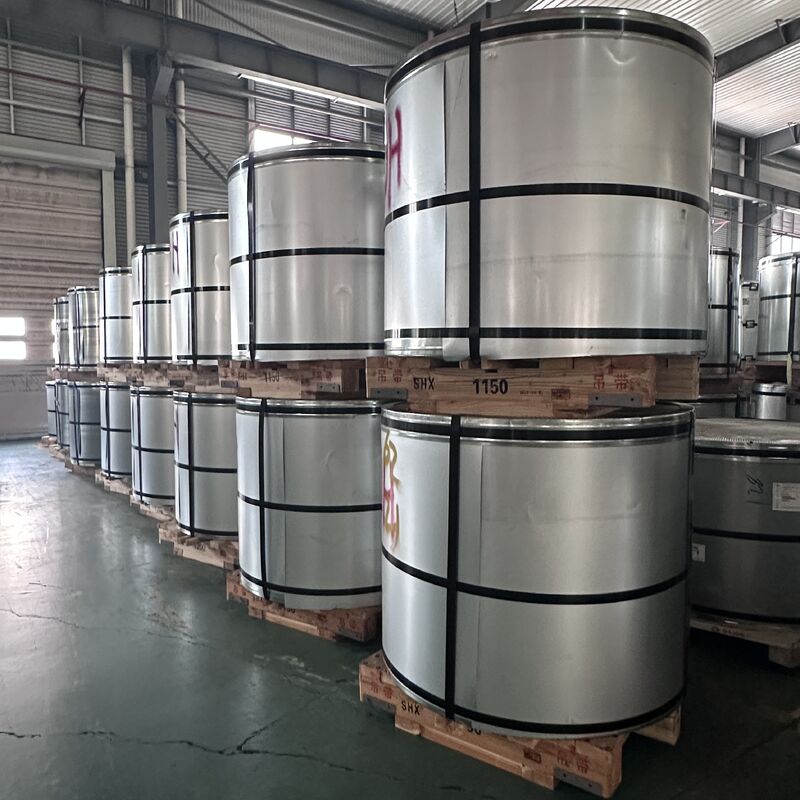
Produkteinführung
Bei der Massenproduktion von kommerziellen Getränken und konservierten Konsumgütern ist die Auswahl eines hochintegrierten Basissubstrats von entscheidender Bedeutung, um eine langfristige Behältersicherheit, luftdichte Versiegelung und vollständige Produktisolierung zu gewährleisten. Unsere spezialisierte Produktlinie für Weißblechspulen wird speziell hergestellt, um den strengen Anforderungen automatisierter Hochgeschwindigkeitsbetriebe für Getränke- und Lebensmittelkonserven weltweit gerecht zu werden. Mithilfe einer fortschrittlichen kontinuierlichen elektrolytischen Abscheidungstechnologie werden kaltgewalzte Stahlbänder mit niedrigem Kohlenstoffgehalt gleichmäßig mit einer Schutzschicht aus hochreinem metallischem Zinn verbunden. Diese präzise Materialkombination liefert ein robustes, mehrschichtiges Abwehrsystem, das die Durchstoßfestigkeit von Baustahl neben den inerten chemischen Eigenschaften von reinem Zinn bietet.
Dieses Metallsubstrat wurde direkt als zuverlässiges Material für Lebensmitteldosen entwickelt und bietet eine vollständige Barriere gegen äußere Luftfeuchtigkeit, Lichteinwirkung und das Eindringen von Sauerstoff. Die verzinnte Oberfläche wird speziellen chemischen Passivierungsbehandlungen unterzogen, die eine inerte äußere Oberflächenschicht erzeugen. Dadurch werden Säureentfernung, Oberflächenoxidation und chemische Migration in empfindliche Flüssigkeiten oder essbare Inhalte verhindert. Ganz gleich, ob es sich um kohlensäurehaltige Getränkedosen, zweiteilige Behälter, dreiteilige Lebensmitteldosen oder leicht zu öffnende Dosen handelt, dieses Material behält das genaue Geschmacksprofil, die natürliche Farbe und die Nährstoffzusammensetzung der verpackten Waren über längere Lebenszyklen der Lieferkette hinweg bei.
Materialeigenschaften und Anpassungsmöglichkeiten
Unterschiedliche Getränkerezepturen, lokale Verarbeitungstemperaturen und automatisierte Dosenlinien erfordern spezifische Materialparameter und physikalische Formen. Um diese vielfältigen Anforderungen zu unterstützen, bieten wir umfassende kundenspezifische Dienstleistungen an, angefangen bei den Kerneigenschaften des Rohstahls bis hin zu den endgültigen Oberflächentexturen. Käufer können maßgeschneiderte chemische Konfigurationen, unterschiedliche mechanische Härteklassen und maßgeschneiderte Zinnbeschichtungsverteilungen anfordern, die genau auf ihre Behältergeometrien und Prägeanforderungen abgestimmt sind.
Unsere fortschrittlichen Verarbeitungsanlagen sind mit Hochleistungs-Rotationsschneidemaschinen und computergesteuerten Spannungsausgleichslinien ausgestattet. Mit dieser Maschine können wir große Endlos-Mastercoils gemäß den Spezifikationen Ihrer Produktionslinie zu schmalen Schlitzbändern oder präzisen rechteckigen Blechen verarbeiten. Für Anwendungen, die einen zusätzlichen chemischen Schutz im Inneren erfordern, bieten wir differenzielle Zinnbeschichtungen an, sodass Sie eine stärkere Zinnbeschichtung auf der Innenseite wählen können, um aggressiven Flüssigkeiten standzuhalten, und eine leichtere, wirtschaftlichere Beschichtung auf der Außenseite für einen kostengünstigen atmosphärischen Rostschutz. Wir bieten auch spezielle Oberflächentexturen an – von hochglänzenden Oberflächen für scharfe lithografische Markengrafiken bis hin zu matten Oberflächen, die den Werkzeugverschleiß bei Hochgeschwindigkeits-Stanzvorgängen reduzieren.
Technische Spezifikationsmatrix
| Metallurgischer Parameter | Spezifikationsstandards und verfügbarer Bereich |
| Materialbasisform | Elektrolytisches Weißblech (SPTE) / Zinnfreier Stahl (TFS) |
| Kernstrukturformat | Kontinuierliche ungeschlitzte Coils / Präzisions-geschlitzte Bandcoils |
| Dickenabmessungen | 0,14 mm – 0,45 mm |
| Spulenbreitenfunktionen | 600 mm – 1050 mm |
| Innendurchmesser der Spule | 508 mm / 610 mm |
| Zinnbeschichtungsmasse (g/m²) | 1,1/1,1, 2,2/2,2, 2,8/2,8, 5,6/5,6, 2,8/5,6 |
| Oberflächenfinish-Profile | Helles Finish, Stein-Finish, Silber-Finish, Matt-Finish |
| Härte- und Härteklasse | T1, T2, T3, T4, T5, DR8, DR9, DR10 |
| Herstellungsstandards | ASTM A623, EN 10202, JIS G3303 |

Warum Branchenführer mit uns zusammenarbeiten
Globale Getränkemarken, Vertragsverpackungsunternehmen und Hersteller von Metallbehältern arbeiten mit uns zusammen, weil wir eine gleichbleibende Qualität von Charge zu Charge, präzise mechanische Formprofile und zuverlässige Logistiksicherheit liefern. Wir verwalten den gesamten Herstellungsablauf von rohen kaltgewalzten Stahlcoils bis hin zu exportverpackten Sendungen. Unsere Spannungsausgleichssysteme stellen sicher, dass jedes Weißblech-Coil saubere Kanten und ein äußerst gleichmäßiges Dickenlayout aufweist. Dadurch werden Zuführungsstaus vollständig vermieden, der Werkzeugverschleiß minimiert und die Ausschussquote auf automatisierten Hochgeschwindigkeits-Zieh- und Falzlinien reduziert.
Unser Fokus auf fortschrittliche Korrosionsbeständigkeit und strenge Testprotokolle gewährleistet zuverlässige Leistung in anspruchsvollen Verpackungsumgebungen. Wir verwenden automatisierte optische Erkennungsgeräte, um die Gleichmäßigkeit der Beschichtung, den Grad der chemischen Passivierung und das Oberflächenölgleichgewicht zu überprüfen, bevor ein Produkt für den Versand freigegeben wird. Unsere mehrschichtige Seetransportverpackung schützt die Metalloberfläche vor Salzwasserluft und Umgebungsfeuchtigkeit und verhindert so Transportrost. Durch die Wahl unserer Materialien können Hersteller ihre automatisierten Produktionsgeschwindigkeiten maximieren, die Materialausbeute verbessern und eine vorhersehbare Lieferkette für ihre modernen Dosenlinien sicherstellen.
Häufig gestellte Fragen (FAQ)
F1: Warum wird für Getränke- und Lebensmitteldosenverpackungen eine elektrolytische Weißblechspule gegenüber Standardstahl bevorzugt?
A1: Unbehandelter Stahl ist sehr anfällig für Feuchtigkeit, Sauerstoff und organische Säuren, die zu schneller Rostbildung und Lebensmittelverunreinigungen führen. Unsere Weißblechspule verfügt über eine hochreine Zinnschicht und eine anorganische Passivierungsbeschichtung, die den Rohstahlkern isoliert. Dieses Design blockiert chemische Reaktionen mit flüssigen Getränkeformulierungen oder Umgebungsfeuchtigkeit und sorgt dafür, dass sowohl der Behälter als auch sein Inhalt vollständig intakt bleiben.
F2: Entspricht dieses Material den globalen Compliance-Richtlinien für die Verwendung als Material für Lebensmitteldosen?
A2: Ja, absolut. Alle unsere Produktionsprozesse verwenden hochreines metallisches Zinn und halten sich an strenge metallurgische Standards, die globale Anforderungen an lebensmittelechte Verpackungen erfüllen, einschließlich ISO 11950 und ASTM-Parameter. Die ungiftige Oberfläche verhindert jegliche Metallmigration und ist daher uneingeschränkt für den direkten Kontakt mit Säften, kohlensäurehaltigen Getränken, Bieren und Obstkonserven geeignet.
F3: Wie tragen unterschiedliche Zinnbeschichtungen dazu bei, die Herstellungskosten für Getränkedosen zu optimieren?
A3: Durch die Differentialbeschichtung werden zwei unterschiedliche Zinngewichte auf beide Seiten des Stahlsubstrats aufgetragen (z. B. 2,8 g/m² auf der einen Seite und 5,6 g/m² auf der anderen Seite). Dadurch können Sie die dickere Schicht auf der Innenseite des Behälters positionieren, um flüssigen Formulierungen oder Innendruck standzuhalten, während Sie auf der Außenseite eine leichtere Schicht für einen effizienten, kostengünstigen atmosphärischen Rostschutz verwenden.
F4: Welche Schutzmaßnahmen werden eingesetzt, um Rost und Kantenschäden bei der Seeschifffahrt zu verhindern?
A4: Jede Spule ist in Hochleistungs-Feuchtigkeitsbarrieren aus Dampfkorrosionshemmern (VCI) eingewickelt, vollständig mit einer schützenden Außenhülle aus Baustahl bedeckt und mit hochfesten Stahlbändern gesichert. Anschließend werden sie fest auf verstärkten, für den Export geeigneten Holzkufen befestigt, um sicherzustellen, dass sie trocken, sauber und völlig rostfrei in Ihrer Produktionsstätte ankommen.


 Ihre Nachricht muss zwischen 20 und 3.000 Zeichen enthalten!